

Work package 3: Demonstrating
Summary
What does it look like when climate data truly supports decision-making? This work package focuses on turning climate data into practical tools that help people and communities adapt to climate change. It develops two examples, called demonstrators, that show how EO data can be used in real-life situations:
- Urban resilience and health impacts from extreme heat; and
- Ecosystem monitoring and nature-based solutions.
The demonstrators help align data with user needs, inform service design, and strengthen coordination between WMO, GCOS and GEO.

Wirestock3
What this work package covers
- Developing science-to-services pathways using Essential Climate Variables (ECVs).
- Working directly with city officials and national decision-makers to co-develop climate services.
- Piloting nature-based solutions in ecosystem management.
- Testing EO-based approaches for monitoring and impact assessment.
Why it matters
Climate data must serve people. This work:
- Translates EO data into decision-ready information.
- Supports communities affected by extreme heat and ecosystem degradation.
- Strengthens cross-organizational collaboration for more effective climate action.
- Provides models for climate services that can be scaled and replicated globally.
How the work is done
- Engage with pilot cities to assess heat-risk mapping methods and tools.
- Organize workshops and technical validation with city and national stakeholders
- Conduct collaborative testing of ECV-based indicators, citizen science, and Copernicus data
- Implement a strategic ecosystem demonstrator in the Maldives to improve mapping and climate response.
Expected results
- Tested urban heat risk indicators and standardized methodologies.
- Validated EO-based climate services tailored to local needs.
- Lessons learnt and guidance to inform inter-agency coordination.
- Recommendations for scaling effective models in other regions.
Update
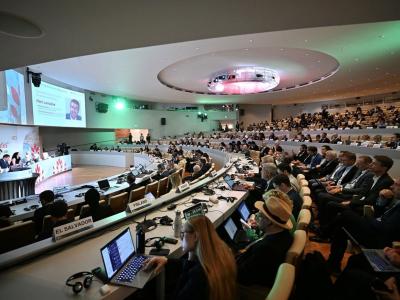
iClimateAction engages with Earth Observation community at the GEO Global Forum in Rome
21 May 2025
The GEO Global Forum in Rome that took place 5-9 May marked the first opportunity to introduce iClimateAction to a wide Earth Observation (EO) community. Representatives of the project engaged in person with key stakeholders to share the project’s vision and initiate dialogue around common goals.
Project update
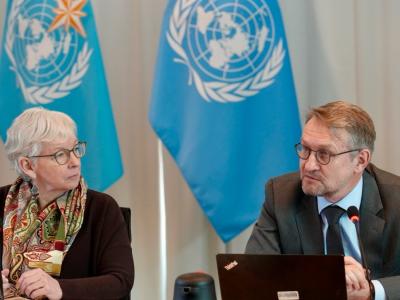
WMO launches iClimateAction to strengthen global climate intelligence
7 March 2025
The World Meteorological Organization (WMO), in partnership with the Global Climate Observing System (GCOS), the Group on Earth Observations (GEO), and the European Commission, launched the iClimateAction project at WMO headquarters and online.
Last updated: 6 October 2026