
Work package 1: Mapping
Summary
Improving how climate data is coordinated starts with understanding how key institutions operate. This work package analyses the existing strategies, programmes and governance structures of WMO, GCOS and GEO. It aims to identify complementarities, overlaps and gaps, and propose more effective coordination for climate data systems that support global policies including the European Green Deal and the Paris Agreement.
Teksomolika
What this work package covers
- Mapping organizational strategies and structures for climate data.
- Reviewing overlaps, complementarities and synergies across WMO, GCOS and GEO.
- Analysing stakeholder roles and data-related initiatives.
- Proposing coordination principles and governance options.
Why it matters
- Stronger coordination reduces duplication and maximizes impact.
- Aligned efforts accelerate the delivery of reliable climate services.
- A unified strategy supports EU and UN climate goals.
- Greater transparency and accountability among global actors.
How the work is done
- Engage directly with executive leadership from WMO, GCOS, and GEO.
- Conduct stakeholder mapping to clarify roles and relationships.
- Undertake a comparative review of mandates and programmes.
- Produce reports with concrete, actionable recommendations.
Expected results
- A shared set of principles for inter-agency coordination on climate data.
- An integrated map of stakeholders, including EU-funded and global actors.
- A detailed gap and synergy analysis to guide strategic alignment.
- A practical roadmap for stronger collaboration across institutions.
Update
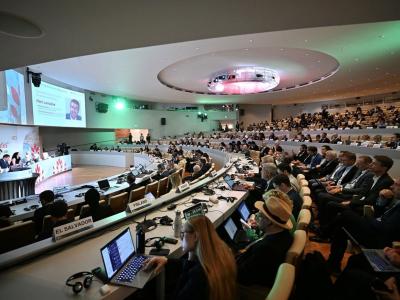
iClimateAction engages with Earth Observation community at the GEO Global Forum in Rome
21 May 2025
The GEO Global Forum in Rome that took place 5-9 May marked the first opportunity to introduce iClimateAction to a wide Earth Observation (EO) community. Representatives of the project engaged in person with key stakeholders to share the project’s vision and initiate dialogue around common goals.
Project update
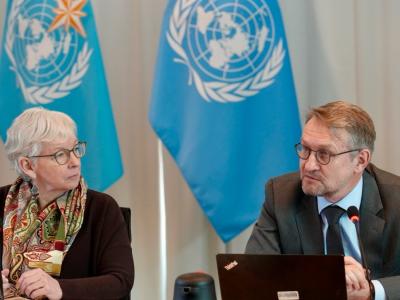
WMO launches iClimateAction to strengthen global climate intelligence
7 March 2025
The World Meteorological Organization (WMO), in partnership with the Global Climate Observing System (GCOS), the Group on Earth Observations (GEO), and the European Commission, launched the iClimateAction project at WMO headquarters and online.